Showing posts with label poem. Show all posts

Tuesday, August 4, 2015

Goat Hour Gospel (Such Salvage)


By Mark Wagenaar

Just as the evening’s about to move on, they appear, not as the apparitional deer—here, & gone in the next moment, without a sound—but one by one,
bumbling through briar, chewing through poison ivy, sniffing at trees.A slow procession walking beneath elms & birches that hold up the last light.
And you’re alone with the traces of things, the news in front of you:the crooked skeleton of Richard III was dug up from a parking lot,
humpbacked, once buried in his boots & battlefield wounds. Nearby a lost riverhas been uncovered, & coughed up its mouthful of Roman skulls.
No relic is safe, it seems, from an invisible tide that presses them upward.Sometimes it’s not the loss that hurts but the indignities of the discovery.
And yet beside the diggers & builders of new things is this mangy congregation,pushing through the scrub without a trail or blueprint or direction.
Their dirty white fur shines a little in this late, lost hour.They bleat as they shamble & piss on each other without warning,
or maybe as a warning, or in greeting. They’ll eat anything—tin can,T-shirt, canvas sack, bones of animals & kings, & carry them awhile.
And so do we: each night, across the country, people turn up at hospitalsunable to speak, for the needle or nail lodged
in their throats. They’re unable to explain why, but we know—that desperate mix of need & panic that can drive us to keep something safe
for good. These dearest items take your words & leave them luminous,radiolucent, shining on the X-ray, like this swallowed ring: a ghostly eclipse.
Small comfort to share an appetite with these goats, this dishevelled lot.But a comfort, too, to know that some things will be saved from the soil,
rescued from time’s indignities, if only for a little while, & by these scruffyreliquaries, on the other side of the valley now, flickering slightly
as they near the vanishing point of the timberline. And we might callsuch salvage mercy. And it must be even for the undeserving,
for those of us who didn’t live right, or live best. Whatever that means.Mercy will find us, even when we fail to recognize it, when we least expect it.


Friday, March 13, 2015

Probability

Probability

By Lia Purpura
source

Most coincidents are not
miraculous, but way more
common than we think--
it's the shiver
of noticing being
central in a sequence
of events
that makes so much
seem wild and rare--
because what if it wasn't?
Astonishment's nothing
without your consent.


Monday, December 9, 2013

Missed Time

Missed Time
Ha Jin
 
My notebook has remained blank for months
thanks to the light you shower
around me. I have no use
for my pen, which lies
languorously without grief.

Nothing is better than to live
a storyless life that needs
no writing for meaning—
when I am gone, let others say
they lost a happy man,
though no one can tell how happy I was.

Wednesday, October 30, 2013

Cagnes-Sur-Mer 1950, by Jorie Graham


Cagnes-Sur-Mer 1950

I am the only one who ever lived who remembers
my mother's voice in the particular shadow
cast by the sky-filled Roman archway
which darkens the stones on the down-sloping street
up which she has now come again suddenly.
How the archway and the voice and the shadow
seize the small triangle of my soul
violently, as in a silent film where the accompaniment
becomes a mad body
for the spirit's skipping images--abandoned homeland--miracle from which
we come back out alive. So here from there again I
read it off the book of time,
my only time, as if in there is a fatal mistake of which
I cannot find the nature--or shape--or origin--I
pick up the infant and place it back again
to where I am a small reservoir of blood, twelve pounds of bone and
sinew and other matters--already condemned to this one soul--
which we are told weighs less than a feather, or as much
as four ounces when grown--as if I could travel, I back up
those arteries, up the precious liquid, across the field of methods, agonies,
astonishments--may I not squander the astonishments--
may I not mistakenly kill brother, sister--I
will sit once again so boldly at my beginning,
dark spot where one story does not yet become another,
and words, which have not yet come to me, will not yet try to tell
where each thing emerges, where it is heading,
and where the flow of tendency will shine
on its fast way downhill. And it will seem to me
that all this is legend,
one of those in which there is no way to look back
and yet you do, you pay for it, yes, but you do. . . .
It was a hilltop town in the south in summer.
It was before I knew about knowing.
My mind ran everywhere and was completely still at the center.
And that did not feel uncomfortable.
A bird sang, it added itself to the shadow
under the archway.
I think from this distance
that I was happy.
I think from this distance.
I sat. It was before I knew walking.
Only my soul walked everywhere without weight.
Where the road sloped downhill there was disappearance.
Which was exactly what I imagined should happen.
Appearance and disappearance.
In my only life.
When my mother's voice got closer it had a body.
It had arms and they were holding something
that must have been a basket. My mind now
can go round her, come in front, and wrap her
as her arms wrapped that basket.
And it must have been wicker
because I see in the light the many lucent browns, the white tips,
as she steps out of the shadow
in which nothing but her hands and the front of her act of carrying
are visible. And when her body arrives
it is with the many lemons entirely struck, entirely taken, by sunshine,
which the heavy basket is still now carrying,
and her bright fingernails woven into each other,
and her face with its gaze searching for me,
gaze which felt like one of the bright things she was carrying
in front of herself, a new belly.
All I was to invent in this life is there in the wicker basket among the lemons
up into the private air in which she is moving,
where she is still a whole woman, and a willing woman,
and I hear what must be prices and names called out
of flowers and fruit and meat and live animals in small cages,
all from below us, at the bottom of the village, from that part
which is so comfortable to me which is invisible,
and in which everything has to be sold by noon.
I think that was the moment of my being given my name,
where I first heard the voices carrying the prices
as her face broke and its smile appeared bending down towards me
saying there you are, there you are.

--Jorie Graham

Friday, October 4, 2013

Morning Song by Sylvia Plath

Morning Song

Love set you going like a fat gold watch.
The midwife slapped your footsoles, and your bald cry
Took its place among the elements.

Our voices echo, magnifying your arrival. New statue.
In a drafty museum, your nakedness
Shadows our safety. We stand round blankly as walls.

I'm no more your mother
Than the cloud that distills a mirror to reflect its own slow
Effacement at the wind's hand.

All night your moth-breath
Flickers among the flat pink roses. I wake to listen:
A far sea moves in my ear.

One cry, and I stumble from bed, cow-heavy and floral
In my Victorian nightgown.
Your mouth opens clean as a cat's. The window square

Whitens and swallows its dull stars. And now you try
Your handful of notes;
The clear vowels rise like balloons.


Sylvia Plath

Thursday, August 29, 2013

Night and its Strange Likeness to a Diego Rivera Mural, by John Rybicki

Amy Hempel assigned this as a reading for our fiction workshop in 2010.


I shadow box the sheet hanging over the opening
             to the back of my house,
tacked up to trap in the heat.

I jab sometimes with knives in each hand
             shredding the sheet before me,
or with a hammer-like swing

to the right stab at the bathroom door.
             A young Mexican man at my gym
beams and asks if I’m training for a fight.

No, just fighting my own demonios.
             He laughs but nods his head yes to this.
Tonight I’m fists against the mattress

propped up against the wall.
             Sometimes I switch to fighting southpaw,
an alien feel.

I’m soldier training for no war
             in an age where the menace
is a field in the brain:

the chess pieces are dunked in flame
             and shuffle about while I blink
and press on from stop light to stop light.

I’m finding the tomahawk again at the tire shop,
             and snapping kicks at my refrigerator
to pass the nights in this ghost house.

Even when I’m bow hunting with the rain
             of red and yellow leaves
that fall like hands all around me,

I wonder has nature finally given
             what my father tried to provide,
slapping the scars all over my skin like medals?

Armor up, boy. The sun may as well
             have brass knuckles
at the ends of its beams.


--John Rybicki

Tuesday, August 20, 2013

from "New Year"

how many times at my schoolgirl’s desk:
what’s beyond those mountains? which rivers?
is the scenery nice without tourists?
am I right, Rainer, rain, mountains,
thunder? it’s not a widow’s pretension—
there can’t be just one heaven, there’s bound to be
another one, rainier, above it? with terraces? I’m judging by the Tatras,
heaven has to look like an amphitheater. (and they’re lowering the curtain.)
am I right, Rainer, God’s a growing
baobab tree? not a Louis d’or?
there can’t just be one God? there’s bound to be
another one, rainier, above him?

--from "New Year" by Marina Tsvetaeva, translated by Caroline Lemak Brickman (full text here)


Marina Tsvetaeva wrote this after Rilke died. For the last year of Rilke's life, the two poets had exchanged passionate letters, but they never met.

Wednesday, August 14, 2013

Separation by WS Merwin

Your absence has gone through me
Like thread through a needle.
Everything I do is stitched with its color.


--WS Merwin

Sunday, July 21, 2013

One poem for the day

Buffalo Bill 's
defunct
                     who used to
                     ride a watersmooth-silver
                                                            stallion
and break onetwothreefourfive pigeonsjustlikethat

                                                                                                                        Jesus
he was a handsome man
                                                            and what i want to know is
how do you like your blueeyed boy
Mister Death


--e. e. cummings

Friday, July 19, 2013

One Poem for the Day

The Rhythms Pronounce Themselves Then Vanish

After they told me the CT showed
there was nothing wrong with my stomach
but my heart was failing, I plunked
one of those weird two-dollar tea balls
I bought in Chinatown and it bobbed
and bloomed like a sea monster and tasted
like feet and I had at this huge
chocolate bar I got at Trader Joe’s
and didn’t answer the door even though
I could see it was UPS with the horse
medication and I thought of that picture
Patti took of me in an oval frame. Sweat
itself is odorless, composed of water,
sodium chloride, potassium salts,
and lactic acid; it’s the bacteria growing
on dead skin that provides the stench.
The average life span of a human taste bud
is seven to ten days. Nerve pulses
can travel up to a hundred and seventy miles per hour.
All information is useless.
The typical lightning bolt
is one inch wide and five miles long.

--Dean Young

Friday, June 7, 2013

From the Glass Essay

Perhaps the hardest thing about losing a lover is
to watch the year repeat its days.
It is as if I could dip my hand down

into time and scoop up
blue and green lozenges of April heat
a year ago in another country.

--The Glass Essay, Anne Carson

Tuesday, February 26, 2013

First Sight by Philip Larkin

-->
-->

First Sight
Philip Larkin

Lambs that learn to walk in snow
When their bleating clouds the air
Meet a vast unwelcome, know
Nothing but a sunless glare.
Newly stumbling to and fro
All they find, outside the fold,
Is a wretched width of cold.

As they wait beside the ewe,
Her fleeces wetly caked, there lies
Hidden round them, waiting too,
Earth’s immeasurable surprise.
They could not grasp it if they knew,
What so soon will wake and grow
Utterly unlike the snow.

Thursday, January 17, 2013

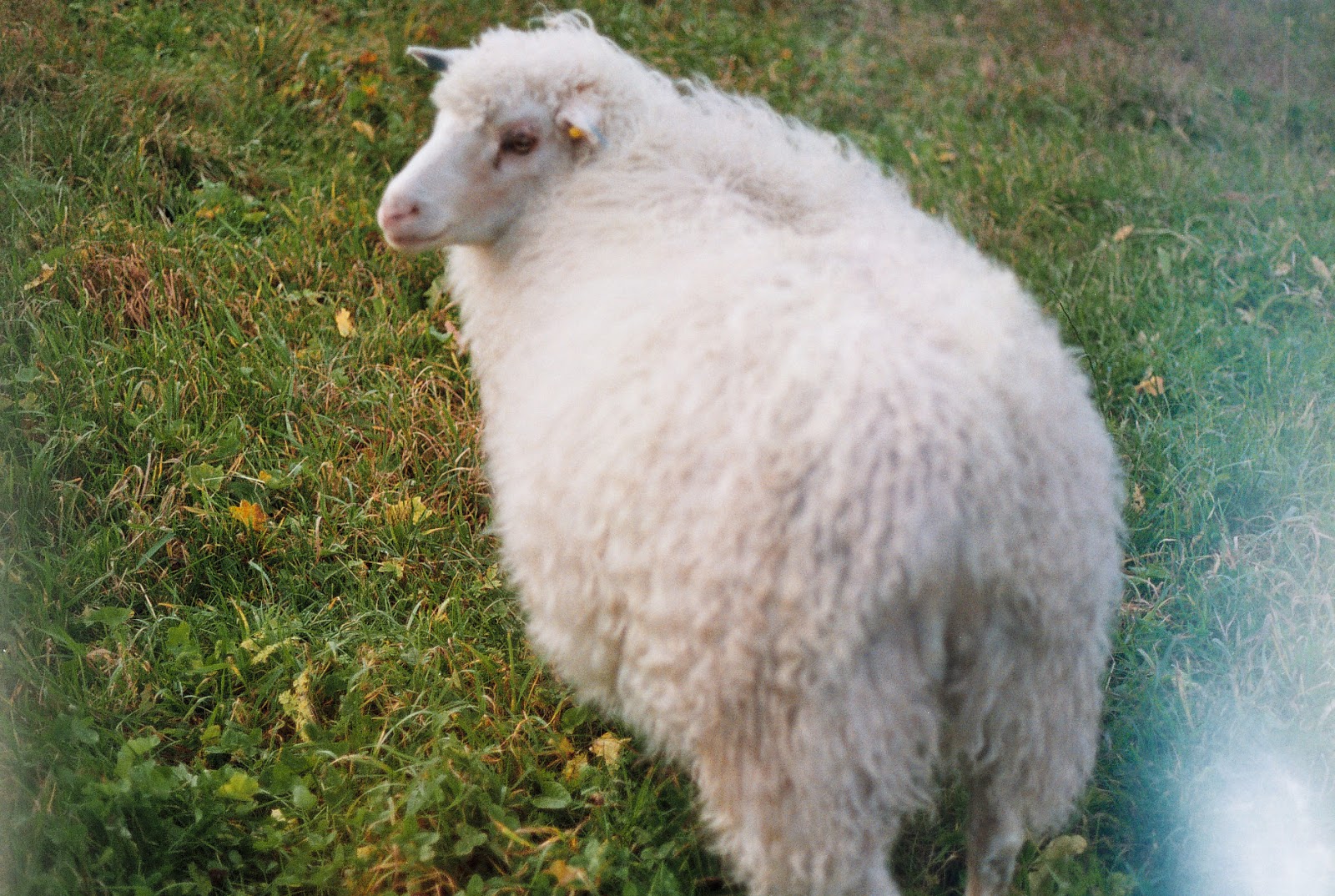
The sheep child

 Lygra, Norway, 2012


"I woke, dying, 
 
In the summer sun of the hillside, with my eyes
Far more than human. I saw for a blazing moment   
The great grassy world from both sides,
Man and beast in the round of their need,
And the hill wind stirred in my wool,
My hoof and my hand clasped each other,
I ate my one meal
Of milk, and died
Staring ..."

--from James Dickey, The Sheep Child