Showing posts with label Lygra Gjestegard. Show all posts

Monday, February 18, 2013


Some camera mistakes, Lygra, 2012

Friday, December 28, 2012

A Little Video about Norway

I am very excited to share this little video I made, with footage from the Island of Lygra, and an interview with Ole Mathias of the Lygra Gjestegard.


Thursday, October 25, 2012

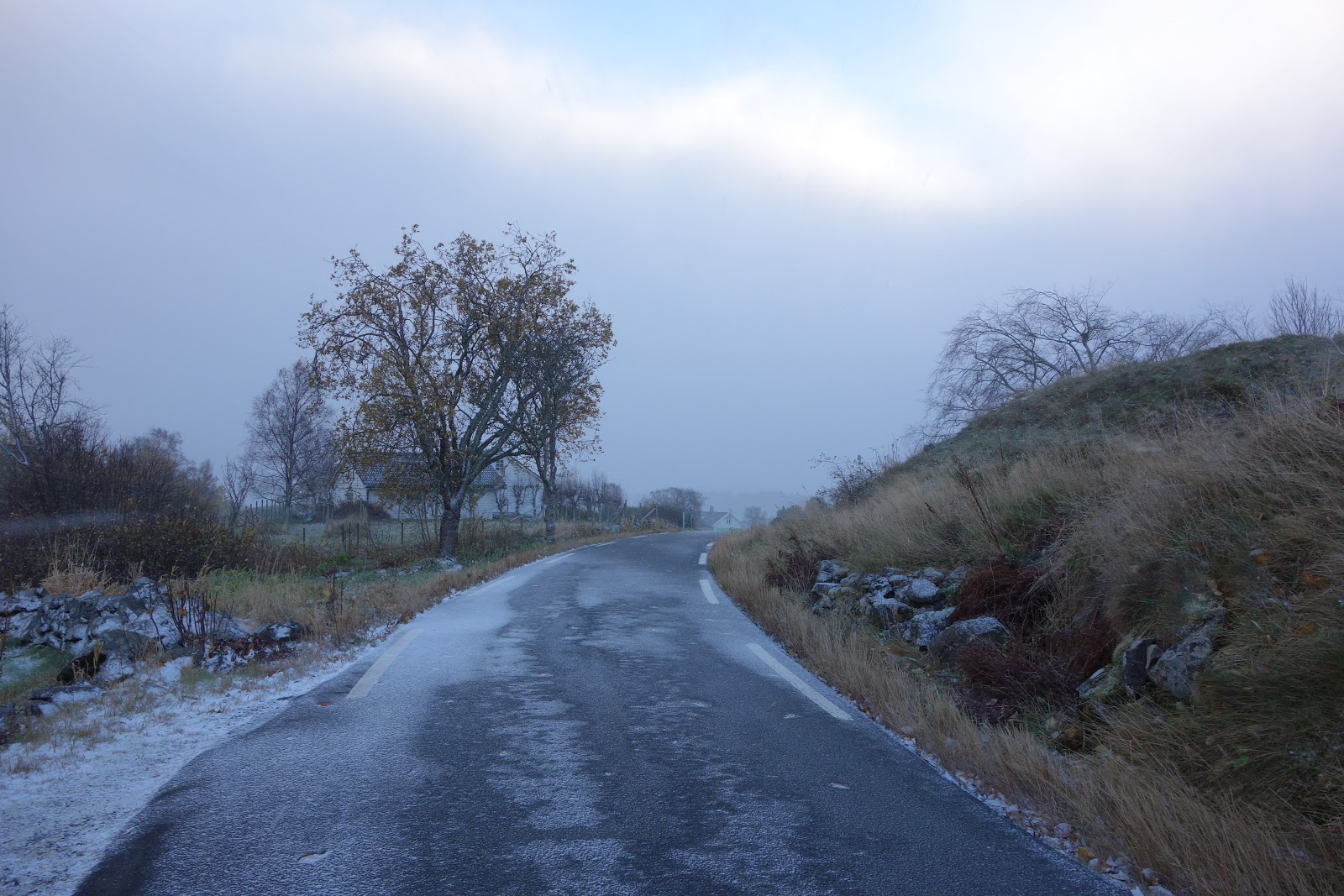
Welcome to Norwegian winter


Have you ever had a dream where you opened a closet door in your house and found a whole other wing that you'd never realized was there? My mother told me she has those dreams, and then I started having them too. The house across the street from us (formerly Henry Louis Gates's house, then the house of a murderer who went to prison for life without possibility of parole, but has since been released) was designed by the same architect, but is two or three times larger, and my mother told me that going around that house is like having that dream. My sister and I went over for the estate sale, after the murder. They even sold the childrens' worn-out teddy bears.

When high school was ending, I had the feeling that I was living in a stage set. This would seem to be the opposite of, but is actually closely related to, the feeling that any door could open up on a whole new section of a building. I love stage sets. I am entranced by stage props. I read every single thing I could find on the making of the sets and props for the Lord of the Rings and Harry Potter. I have always loved making props. As a kid I made fake menus for nonexistent restaurants, fake quizzes for nonexistent classes, fake questionnaires for nonexistent polls. In college I made a life-sized cow, among other props, but the props of fantasy worlds for films are really what interests me, so much so that I looked into how I could go to LA and apprentice for a propmaker. I don't want to give up that dream yet.

Tomorrow is my last day on Lygra, and the island is beginning to take on a bit of that stage-set feeling. There are many doors I have not opened yet, and now I don't have time anymore. The surface of things is always a disappointment, but the depth of things often does not exist in the way you wish it would.


We went through about 20 seasons of weather today--hail to rain to sunshine, then intense wind, wet now, then blizzardlike snow blowing horizontally across the fields, then sun ("Maybe we'll have a snowbow!" I said to Robert, who was not amused), repeat. The water is choppier than I've ever seen it. But even at the stormiest the sky has been pearly and translucent gray. It is not a dense sky, more of a liquid one. I've been thinking about that good old literary cliché, "the sky was the color of brushed steel," "the sky was the color of brushed tin," "the sky was the color of aluminum." Even Teju Cole in Open City falls victim to this simile ("The sun was setting as I left Columbia Presbyterian, giving the sky the look of tin," p. 20), and I bet I have too, because I like those two different weights/textures together. Anyway, the Lygra sky is too lively for all of that.


Tuesday, October 9, 2012

Slakt


 Above: Photobooth struggles to balance its colors after I thrust my computer out of the window to photograph the third-best rainbow I've seen on Lygra

Today was a day off, after three days of gathering sheep for slaughter. (Slakt means slaughter in Norwegian. Because sometimes Norwegian is like phonetic English!) Rounding up the sheep is harder than you (or I, having herded goats all summer) would expect, because they are wild and live all year on the heathlands without human intervention. Like Erik said, "They are more fit than us. They are faster and know the landscape better. Our only advantage is our intelligence." Erik is a farmer on Lygra. He held a two-hour tactical meeting the night before the major round-up, using color-coded maps to show how five different groups of people would line up and march across the neighboring uninhabited five-kilometer island (Lurekalven), forcing the sheep south into the corral.

The sheep evaded capture twice--the worst round-up in ten years or so. Farmers, residents of Lygra, their relatives, grad students from Bergen, and wwoofers (about 50 people in all) strung out across the island, into ravines and creek beds and sucking marshlands, through bracken and juniper, up on high heads and cliffs, trying to maintain our lines so the sheep would be afraid to pass us. We communicated by shouting. It is surprising how far a voice can carry from a high hill, even in windy rain--an old-fashioned special effect. One ewe, the flock's leader, twice thwarted us, darting courageously through our ranks like Tim Tebow (I have no idea if that simile even makes sense), the other hundred sheep pounding after.

On the third try, we managed to force them into the corral. After all that herding, they were like celebrities. We all stared at them as we refreshed with paper bowls of mutton stew. These sheep are black, white and gray, an ancient breed of short-tailed sheep no bigger than large dogs. Their wool is so fatty it clogs yarn-making machines--the kind of wool you could make into a waterproof sweater, like in A Moveable Feast. The Vikings used these sheep's wool for their sails.

They huddled together desperately as we grabbed them one by one, deciding which rams to keep as studs, which to sell, which lambs were fat enough to keep alive, which were too little to kill, which ewes had healthy enough udders and teeth to have healthy children again. These survivors got medicine and a quick return to the heath. The rest we ear-tagged (some are only good for meat, others for their skins too--those with multicolored coats, dove gray or black on the outside and creamy white nearer the body), grabbed by the horns or neck and fought down a slick muddy hill to the boat. "Are the moms sad without their kids?" I asked Johan. "They don't understand death," he said. But that wasn't what I was asking.