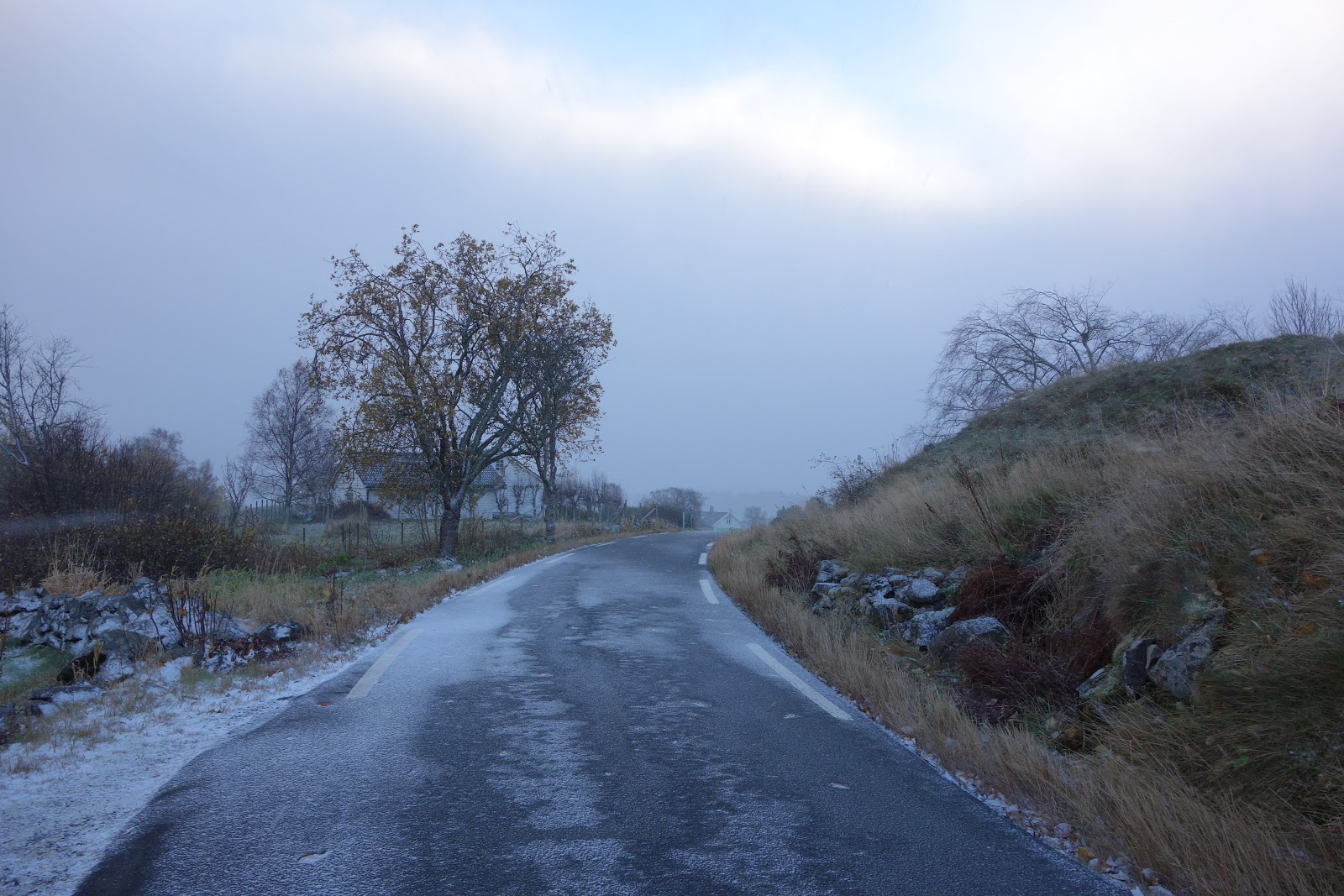
Someone asked me on Tumblr yesterday, "How do you support yourself?" Actually, they left off the question mark, which made it feel more metaphoric/aggressive, so I'm not sure if this post will appeal to them. Anyways, I thought I'd write down some practical tips from my long-term travels.
1. Wwoof or find another way to live/work in a host family (Workaway and Helpx are two more options). WWOOF stands for "World Wide Opportunities on Organic Farms." (I heard that it used to stand for "Willing Workers on Organic Farms," which I like better, since it has a bit of a Marxist ring to it.) Here is my post all about wwoofing.
This is my absolute #1 recommendation--by the end, I felt like I wasn't wwoofing in order to travel, but traveling in order to wwoof. You will meet amazing, idealistic, self-sufficient people, live in the most bizarre and isolated places, and get to know the traditions and the culture of places you're going. In exchange for about 6 hours of work a day, with 1 or 2 break days a week, you will get room and board and companionship.

Don't fear WWOOF Independents, the slightly less organized WWOOF website for countries with less farms. They may have less oversight from a national WWOOF coordinator, but I loved the fringy personalities I met in Norway when it didn't yet have a national organization, and I certainly never felt like I was about to get stabbed, except one time.
2. Stay in one place for a long time. I think three weeks at minimum. Or else I think it's really hard to get much a feel for any place, and I've found there's no emotional point in traveling (for me) if I'm just looking at important buildings and museums. It's all about emotions!!
3. The hostel-booking website Hostelworld. I think this might be the most popular hostel-booking website but I didn't know that until I started traveling last year and my far-traveling friend Julian recommended it. The reviews tend to be really accurate and it's easy and trustworthy to book rooms even in very far-away places.
I've never couchsurfed because I am too shy. It's okay, I think, not to couchsurf, though everyone constantly recommends it.
4. Flat souvenirs and presents. The best things I bought while traveling were old postcards and photos from flea markets. My friend Anastasia found some amazing children's books and posters when she was traveling in the Middle East, which was also very inspiring to me. These things tend to be cheap and very special, and you can give them away or use them to decorate your walls. And it's really fun to go to a flea market and dig through all the old photos and see what images stop you in your tracks.


By the same token, I recommend bringing a nice camera and a voice recorder. I felt much more content to skimp on other areas of travel (food, lodging, activities, daytrips, etc) when I could make art as I went along.
6. Go to a free museum and tell yourself that you only want to look at one thing. I'm realizing that a major theme of this list/my attitude is guilt-free travel. I tried to never put pressure on myself to see all the sights or cram more into each day. That sort of thing cancels out the wonder of travel for me, since it's all about finding the unexpected, and plus solo travel can be so draining.
So, for example, I went to the Louvre, which I could get into for free with my visa, and only planned to look at Napoleon III's chambers, though I also found some awesome medieval St. Lucy depictions (she's the saint who carries eyeballs on a plate!) and other pleasantly weird shit.
If you end up in NYC, my current hometown, you can go to the Metropolitan Museum of Art for one cent (don't let them make you feel too guilty! You don't have to pay $25 or whatever they recommend!). The Vermeers might be the ultimate thing at the Met, but a more offbeat choice would be this amazing El Greco landscape called "View of Toledo" about which Julian wrote a poem.
7. Travel alone, then you can spend money only on what you like. I think that the feeling of loneliness in its negative form is more than counter-balanced by the feeling of not being beholden to anyone. You start to get used to yourself and what you like.
I've come to understand that I always want to go to places with animals, beautiful views, and old-fashioned or alternative lifestyles. I would never spend money on an alcoholic drink or a disco (except during the terrible imprisonment of study abroad!), but I'll spend a huge amount on food (particularly ramen and millionaire shortbread). For hostels, I'll always pick noisy and good atmosphere over quiet and buttoned-down, because I have no problem with earplugs. I can never bring myself to throw anything away (a terrible trait in a long-term traveler), so I try to avoid buying things that will overflow my suitcase, etc. It's all about knowing yourself.

8. You probably shouldn't go to Norway, it will kill your dirt-cheap soul. It was lovely but intolerably expensive. There is really no way at all to do it cheaply, even if you're only going to camp out the whole time. I found it very depressing that I didn't even have the funds to get a cup of coffee. The expense made it impossible to engage with locals in cities.
Still, if you feel like you won't go nuts spending $15 on a tiny slice of horrible pizza, see if you can wwoof at Nordvoll Farm, the northernmost wwoof place in the world, 200 miles above the Arctic Circle, where Roger Lockertsen may serve you whale under the midnight sun.


9. One last idea about money. While I was abroad last year Thought Catalog published this article called "Stop Telling Me to Travel, I Have No Money." I read this and felt both very lucky and very guilty, because the catalyst for me being able to travel came from my university, which gave me a grant to interview Norwegian farmers about their experiences with climate change. I understood Chloe Masterson's frustrations, and felt angry at all the people who encourage people to "find themselves via travel," without considering the privilege inherent in any kind of travel.
But I was really comforted by the commenters, a lot of whom disagreed with Masterson in a really interesting way. Lots of them wrote things to the effect of, "I have no money, but I travel anyway." And I realized I'd met a lot of those people--people who get temporary jobs for a few months in the US, make a few thousand dollars, and then set off in whatever direction they like. People who work at hostels or tutor English on the road, who have no savings at all, who return to the US when they can't make it any more, earn some more money, and leave again. People who really feel a compulsion. I like to think that, if you're willing to make it the top priority in your life, at the expense of comfort/security/privacy, you can go anywhere for however long you like.
1. Wwoof or find another way to live/work in a host family (Workaway and Helpx are two more options). WWOOF stands for "World Wide Opportunities on Organic Farms." (I heard that it used to stand for "Willing Workers on Organic Farms," which I like better, since it has a bit of a Marxist ring to it.) Here is my post all about wwoofing.
This is my absolute #1 recommendation--by the end, I felt like I wasn't wwoofing in order to travel, but traveling in order to wwoof. You will meet amazing, idealistic, self-sufficient people, live in the most bizarre and isolated places, and get to know the traditions and the culture of places you're going. In exchange for about 6 hours of work a day, with 1 or 2 break days a week, you will get room and board and companionship.
My digs while wwoofing on Lygra Island, Norway
Don't fear WWOOF Independents, the slightly less organized WWOOF website for countries with less farms. They may have less oversight from a national WWOOF coordinator, but I loved the fringy personalities I met in Norway when it didn't yet have a national organization, and I certainly never felt like I was about to get stabbed, except one time.
2. Stay in one place for a long time. I think three weeks at minimum. Or else I think it's really hard to get much a feel for any place, and I've found there's no emotional point in traveling (for me) if I'm just looking at important buildings and museums. It's all about emotions!!
3. The hostel-booking website Hostelworld. I think this might be the most popular hostel-booking website but I didn't know that until I started traveling last year and my far-traveling friend Julian recommended it. The reviews tend to be really accurate and it's easy and trustworthy to book rooms even in very far-away places.
I've never couchsurfed because I am too shy. It's okay, I think, not to couchsurf, though everyone constantly recommends it.
4. Flat souvenirs and presents. The best things I bought while traveling were old postcards and photos from flea markets. My friend Anastasia found some amazing children's books and posters when she was traveling in the Middle East, which was also very inspiring to me. These things tend to be cheap and very special, and you can give them away or use them to decorate your walls. And it's really fun to go to a flea market and dig through all the old photos and see what images stop you in your tracks.
My favorite flat souvenir, from the Porte de Clignancourt flea.
5. Bring a watercolor kit. The best one that still isn't too too expensive is the Cotman set from Windsor and Newton. This is basically the one I have and I love love love it.
Watercolors provide a dirt-cheap way to engage in a new way with the environment. You can make beautiful souvenirs or postcards, but they're also a pastime, a way to be alone without feeling like a weirdo, a way to productively appreciate the beauty all around you. If you hate drawing or painting, you can just do a color that you see, a shape, an impression--I've taken a lot of art classes but often the freshest and most interesting work comes from people who don't have a lot of technical skills, but do have a sensibility and an interest in paying attention.
Michelle and I drew some of the first flowers to bloom at Nordvoll Farm, May 2013.
A favorite quote about art: "Attention is pure good. What brings states of high attention is successful as art without further ado." --Tim Allen and Andrew Duncan
6. Go to a free museum and tell yourself that you only want to look at one thing. I'm realizing that a major theme of this list/my attitude is guilt-free travel. I tried to never put pressure on myself to see all the sights or cram more into each day. That sort of thing cancels out the wonder of travel for me, since it's all about finding the unexpected, and plus solo travel can be so draining.
So, for example, I went to the Louvre, which I could get into for free with my visa, and only planned to look at Napoleon III's chambers, though I also found some awesome medieval St. Lucy depictions (she's the saint who carries eyeballs on a plate!) and other pleasantly weird shit.
If you end up in NYC, my current hometown, you can go to the Metropolitan Museum of Art for one cent (don't let them make you feel too guilty! You don't have to pay $25 or whatever they recommend!). The Vermeers might be the ultimate thing at the Met, but a more offbeat choice would be this amazing El Greco landscape called "View of Toledo" about which Julian wrote a poem.
7. Travel alone, then you can spend money only on what you like. I think that the feeling of loneliness in its negative form is more than counter-balanced by the feeling of not being beholden to anyone. You start to get used to yourself and what you like.
I've come to understand that I always want to go to places with animals, beautiful views, and old-fashioned or alternative lifestyles. I would never spend money on an alcoholic drink or a disco (except during the terrible imprisonment of study abroad!), but I'll spend a huge amount on food (particularly ramen and millionaire shortbread). For hostels, I'll always pick noisy and good atmosphere over quiet and buttoned-down, because I have no problem with earplugs. I can never bring myself to throw anything away (a terrible trait in a long-term traveler), so I try to avoid buying things that will overflow my suitcase, etc. It's all about knowing yourself.
Some expensive-ass ramen I ate in London at Bone Daddy's because I am a hog
8. You probably shouldn't go to Norway, it will kill your dirt-cheap soul. It was lovely but intolerably expensive. There is really no way at all to do it cheaply, even if you're only going to camp out the whole time. I found it very depressing that I didn't even have the funds to get a cup of coffee. The expense made it impossible to engage with locals in cities.
Still, if you feel like you won't go nuts spending $15 on a tiny slice of horrible pizza, see if you can wwoof at Nordvoll Farm, the northernmost wwoof place in the world, 200 miles above the Arctic Circle, where Roger Lockertsen may serve you whale under the midnight sun.
9. One last idea about money. While I was abroad last year Thought Catalog published this article called "Stop Telling Me to Travel, I Have No Money." I read this and felt both very lucky and very guilty, because the catalyst for me being able to travel came from my university, which gave me a grant to interview Norwegian farmers about their experiences with climate change. I understood Chloe Masterson's frustrations, and felt angry at all the people who encourage people to "find themselves via travel," without considering the privilege inherent in any kind of travel.
But I was really comforted by the commenters, a lot of whom disagreed with Masterson in a really interesting way. Lots of them wrote things to the effect of, "I have no money, but I travel anyway." And I realized I'd met a lot of those people--people who get temporary jobs for a few months in the US, make a few thousand dollars, and then set off in whatever direction they like. People who work at hostels or tutor English on the road, who have no savings at all, who return to the US when they can't make it any more, earn some more money, and leave again. People who really feel a compulsion. I like to think that, if you're willing to make it the top priority in your life, at the expense of comfort/security/privacy, you can go anywhere for however long you like.